
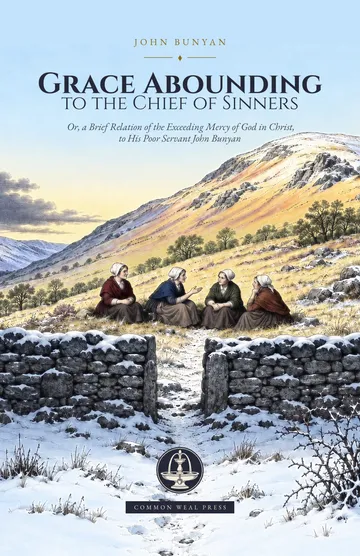
Grace Abounding to the Chief of Sinners
John Bunyan · 1666
Bunyan's own story of years of fear and doubt, and how he found peace, told with startling honesty.
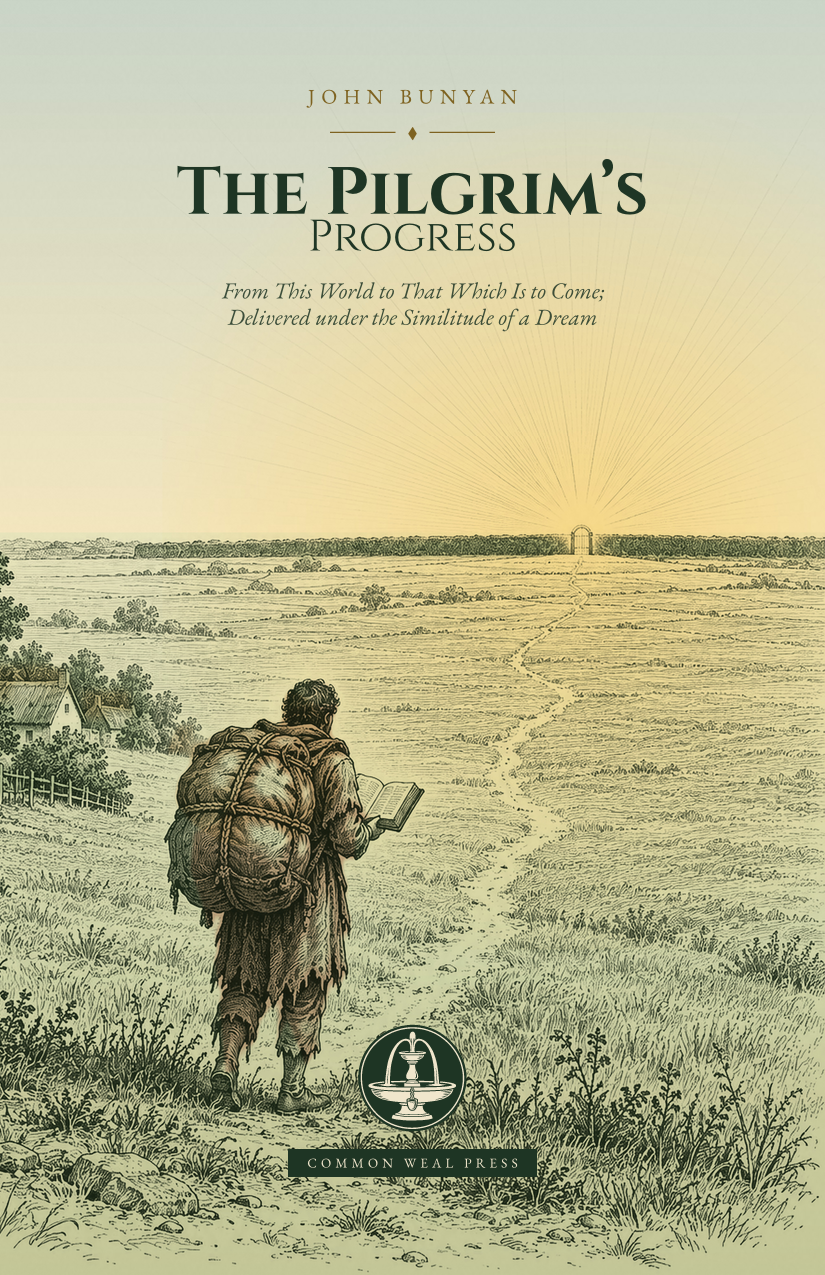
1678 · The Christian life
From This World to That Which Is to Come
A man named Christian, weighed down by a heavy burden on his back, sets out on foot for the Celestial City. On the way he sinks in the Slough of Despond, fights the monster Apollyon, is put on trial at Vanity Fair, and is locked in the dungeon of Giant Despair.
Bunyan wrote much of it in prison. It is an adventure story, an allegory of the Christian life, and one of the most influential books ever written in English. This edition includes both parts: Christian's journey, and the later journey of his wife Christiana and their children.
Free to read and download. Paperbacks are coming soon. They will be printed on demand and sold at cost: we make nothing on them.
For churches, schools and local printers: the print-ready files are exactly what we send to Lulu, with the cover's spine sized to the page count. Print as many as you like.
Then & Now
This book is already in modern English. Compare it with its source and see each small correction the editor made.
The source text
Then said Mercy, But the proverb is, “To go down the hill is easy.” But James said, (for that was his name,) The day is coming when, in my opinion, when going down the hill will be the hardest of all. ‘Tis a good boy, said his master; thou hast given her a right answer. Then Mercy smiled, but the little boy did blush.
Today
Then said Mercy, But the proverb is, “To go down the hill is easy.” But James said, (for that was his name,) The day is coming when, in my opinion, ‸ going down the hill will be the hardest of all. ’Tis a good boy, said his master; thou hast given her a right answer. Then Mercy smiled, but the little boy did blush.
About this edition
Bunyan's Pilgrim's Progress, both parts, as CCEL gives it (Logos's text of the 1853 Auburn edition), with CCEL's slips and lost words corrected against the first edition of Part I (1678) and a 1732 printing of Part II.
99.8% of the words are exactly as in the source. The rest are small corrections, each one recorded.
Open Then & NowSources
Checked against
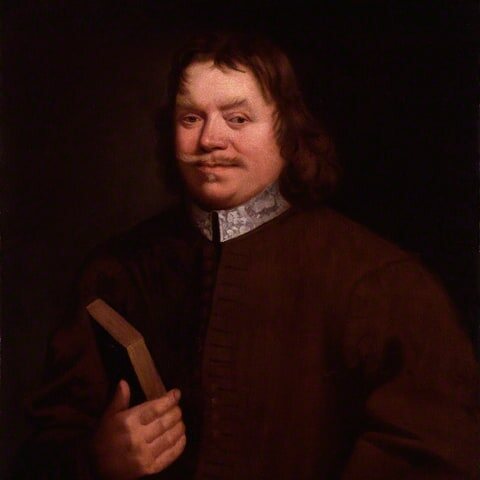 About the authorJohn Bunyan 1628–1688A Bedford tinker and preacher, author of The Pilgrim's Progress.